What does the CanMNT’s training camp squad tell us about their prospective World Cup roster?


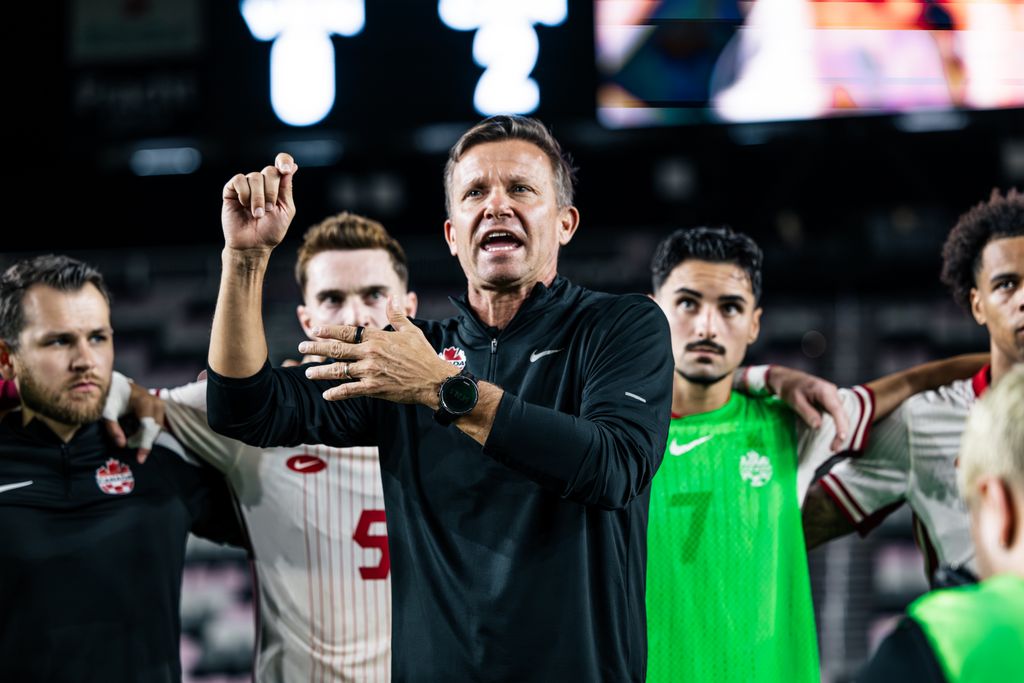
The CanMNT have kicked off a big week in Charlotte, as their pre-World Cup camp is now officially underway, after quietly kicking off last week.
Over the next few days, Jesse Marsch’s side will hold a training camp in North Carolina, as they begin their preparations for the 2026 World Cup in earnest.
With their opening match of that tournament not coming for a couple of weeks, they’ve still got a lot to do before then, as they’ll take on Uzbekistan in Edmonton on June 1st and Ireland in Montréal on June 5th in a pair of pre-tournament friendlies, matches that will hopefully ensure they’re as prepared as possible for that World Cup opener against Bosnia & Herzegovina at Toronto Stadium on June 12th.
Before then, though, they’ll name their World Cup squad this week, revealing which 26 players will represent Canada this summer in an announcement on Friday, May 29th. Given that they’ve called up 32 players to this pre-World Cup camp, that leaves Marsch needing to cut six players ahead of this announcement, which is why this week will be so crucial for him and his staff - they’ll use this time to evaluate several players in person before naming their final team at the end of the week.
ROSTER DROP 🚨
— OneSoccer (@onesoccer) May 25, 2026
Here is Jesse Marsch's 32-player CanMNT 🇨🇦 squad for the team's pre-tournament training camp in Charlotte, ahead of June friendlies vs. Uzbekistan and Ireland and a World Cup squad announcement on May 29 👀 pic.twitter.com/CqReT0n31Y
Instead of picking their final squad before the pre-camp, Canada wanted the extra flexibility that an in-person evaluation would provide, especially given some of the injuries they’re dealing with in their squad, so they’ll want to make the most of the chance to see their players up close in Charlotte.
With that in mind, here’s what stood out from the pre-World Cup squad announcement, and what it informs us about how Marsch is feeling ahead of his final squad reveal on May 29th.
Canada’s centre back conundrum:
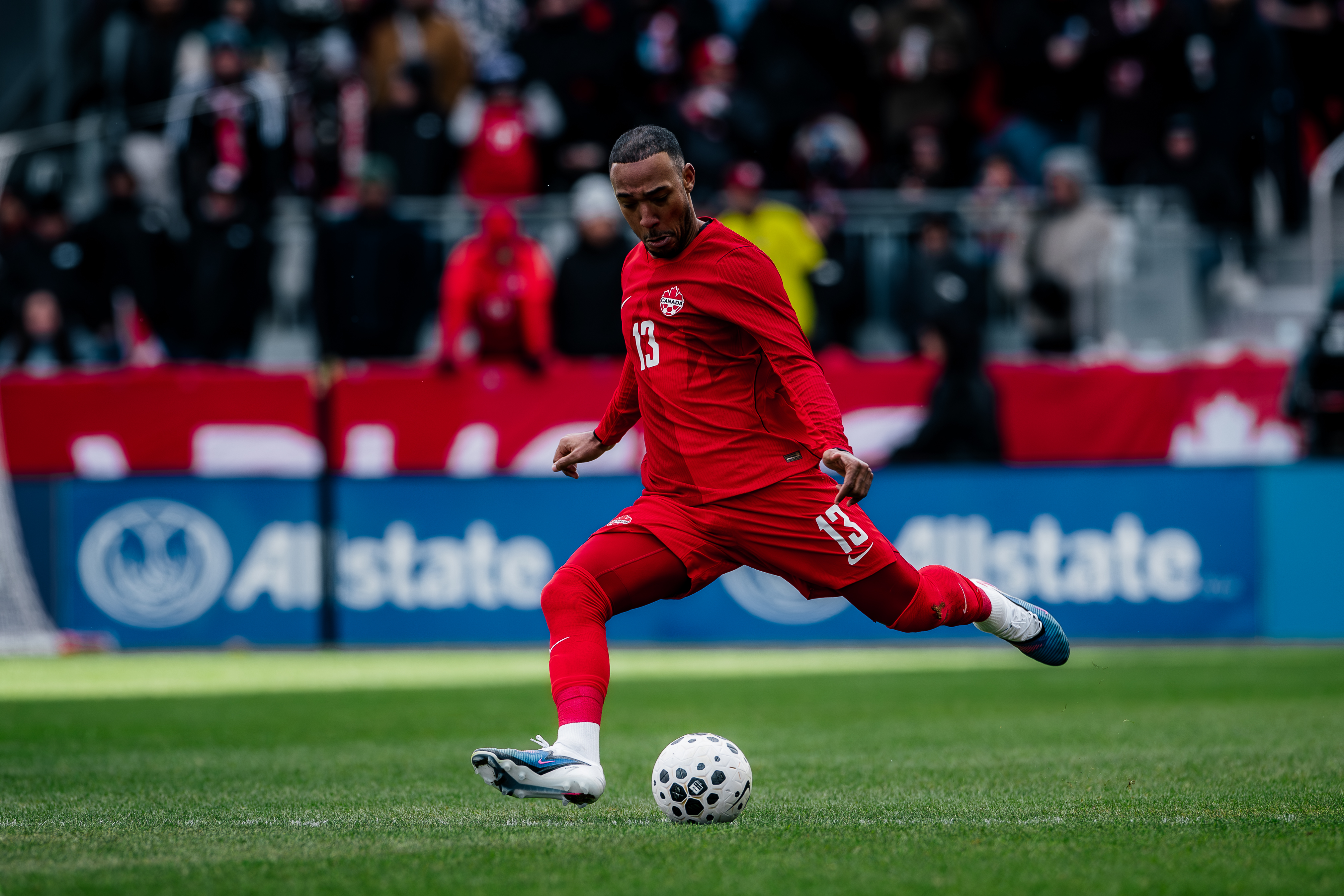 Immediately, one big thing that stands out when looking at this squad is to see the number of centre-backs that have been called up, as Jesse Marsch has selected a whopping seven centre-backs for this camp, more than any other position in the squad.
Yet, that speaks to the worries that Marsch currently faces at the position, one where Canada has been hit hard by the injury bug over the past 12 months.
From Moïse Bombito’s ongoing recovery from a leg fracture, Alfie Jones’s ankle surgery, Derek Cornelius’s muscle injury and subsequent lack of minutes for Rangers, and Luc De Fougerolles’s injury struggles, it has been a tough season for Canada’s four main centre backs - and then, because that wasn’t enough, Ralph Priso, who has been one of the best Canadian centre backs over the last few months, also missed an extended period of time with a hamstring injury.
Because of that, Marsch is exercising all sorts of caution when it comes to his centre-backs, which is why he’s called in seven names for this camp, with Joel Waterman and Jamie Knight-Lebel also joining Bombito, Jones, Cornelius, De Fougerolles and Priso in Charlotte.
In an ideal world, Marsch would probably only be considering calling up four centre-backs for this World Cup, allowing him to bring some extra attackers, but with the uncertain status of Bombito and Jones, in particular, he seems likely to bring five or maybe even six centre-backs.
Now, it’ll be fascinating to see which players he ends up bringing. The good news is that Bombito’s recovery appears to be on schedule, even if it remains to be seen whether or not he’ll be able to go a full 90 minutes by the time the World Cup comes around, so that helps things.
So, if you presume that Bombito will be there along with Cornelius and De Fougerolles, the next big name to watch is Jones, who had surgery in January. Marsch seemed optimistic about his status, but unlike Bombito, who trained with Canada in March and returned to OGC Nice training in April, Jones hadn’t appeared to have trained for club or country before arriving in Charlotte (even if Marsch says he’s so far looked good since coming to Charlotte).
Because of that, it seems likely that there’s a world where both Priso and Waterman are included in Canada’s World Cup squad, when it had once seemed that they’d compete against each other for a spot. Even if Jones is included, with the uncertainty surrounding his health, having both Waterman and Priso as cover does give Marsch a bit more flexibility, even if it does seem a bit extreme for a team to bring six centre-backs when they don’t even use a back-three formation.
At the same time, it’s worth noting that this outcome is only a possibility due to Priso and the flexibility he offers. It can’t be forgotten that while he’s been excellent as a centre back lately, he’s naturally a midfielder, something he reminded onlookers of with an excellent performance at the position in his last Vancouver Whitecaps game before this camp. Bringing him in does give you another body to rely on in central areas.
All of a sudden, it feels less outrageous to bring six centre backs if you know that Priso’s inclusion also offers cover elsewhere on the field - and, for what it’s worth, having this many centre backs also opens the door for Canada to experiment with a back five formation as an emergency option if needed (even if that formation doesn’t exactly mesh with Marsch’s aggressive philosophy).
Otherwise, it feels like Knight-Lebel’s inclusion in this camp is more to offer cover if further injury troubles crop up, such as a setback to Bombito, Jones, De Fougerolles or Priso - while he’s a high-potential option, he only seems set to be included in the World Cup squad if players in front of him go down.
Will there be room for another attacker?
Of course, as mentioned earlier, what happens at the centre back position will have a big knockdown effect on the rest of the squad, especially in the attack.
As it stands, it appears likely that this Canadian side will for sure bring four wingers and four strikers to the World Cup - those would be wingers Ali Ahmed, Tajon Buchanan, Liam Millar and Marcelo Flores, along with strikers Jonathan David, Cyle Larin, Tani Oluwaseyi and Promise David (especially after Marsch issued a positive update on Promise David’s status on Monday in his recovery from hip surgery).
“He’s going to make the squad” 😎
— OneSoccer (@onesoccer) May 25, 2026
Jesse Marsch with the update we all wanted to hear on Promise David 🇨🇦#CanMNT pic.twitter.com/pS1QE1beCn
With Canada expected to bring four full backs and five midfielders, that’d leave them with room to bring only one more winger or forward if they bring five centre backs, and no room to bring any more attackers if they bring six centre backs.
That could be bad news for Daniel Jebbison, Jacen Russell-Rowe, Jacob Shaffelburg and Jayden Nelson, who are all included in this training camp squad, as Marsch will likely only have room to bring one of them - unless he does something surprising, such as bringing only four centre backs or four midfielders, which are both unlikely.
On paper, Jebbison is the favourite to be included, as he had a strong March camp, but Shaffelburg and Nelson each bring unique profiles to the table as wingers, while Russell-Rowe had a solid end to the season after moving to Ligue 1 side Toulouse FC.
For what it’s worth, though, there is one thing working in the favour of Jebbison and Russell-Rowe compared to Shaffelburg and Nelson - this Canadian side has a surprising amount of flexibility out wide. On top of the four main options they have at the position, Richie Laryea, Alphonso Davies, Niko Sigur, Jonathan Osorio and Jonathan David can all play on the wing - and Jebbison has also featured there in the past, which improves his odds of making the squad.
With Canada’s desire to play with two strikers, that gives a massive edge to Jebbison, as well as Russell-Rowe, given that it’s hard to imagine Canada only bringing four striker options to the World Cup (although Osorio, Flores and Ismaël Koné can all play underneath the striker as #10s).
Of course, if Shaffelburg and Nelson impress, that could change Marsch’s calculations, but it feels like this week is going to be about a battle between Jebbison and Russell-Rowe, unless something changes elsewhere in the squad. 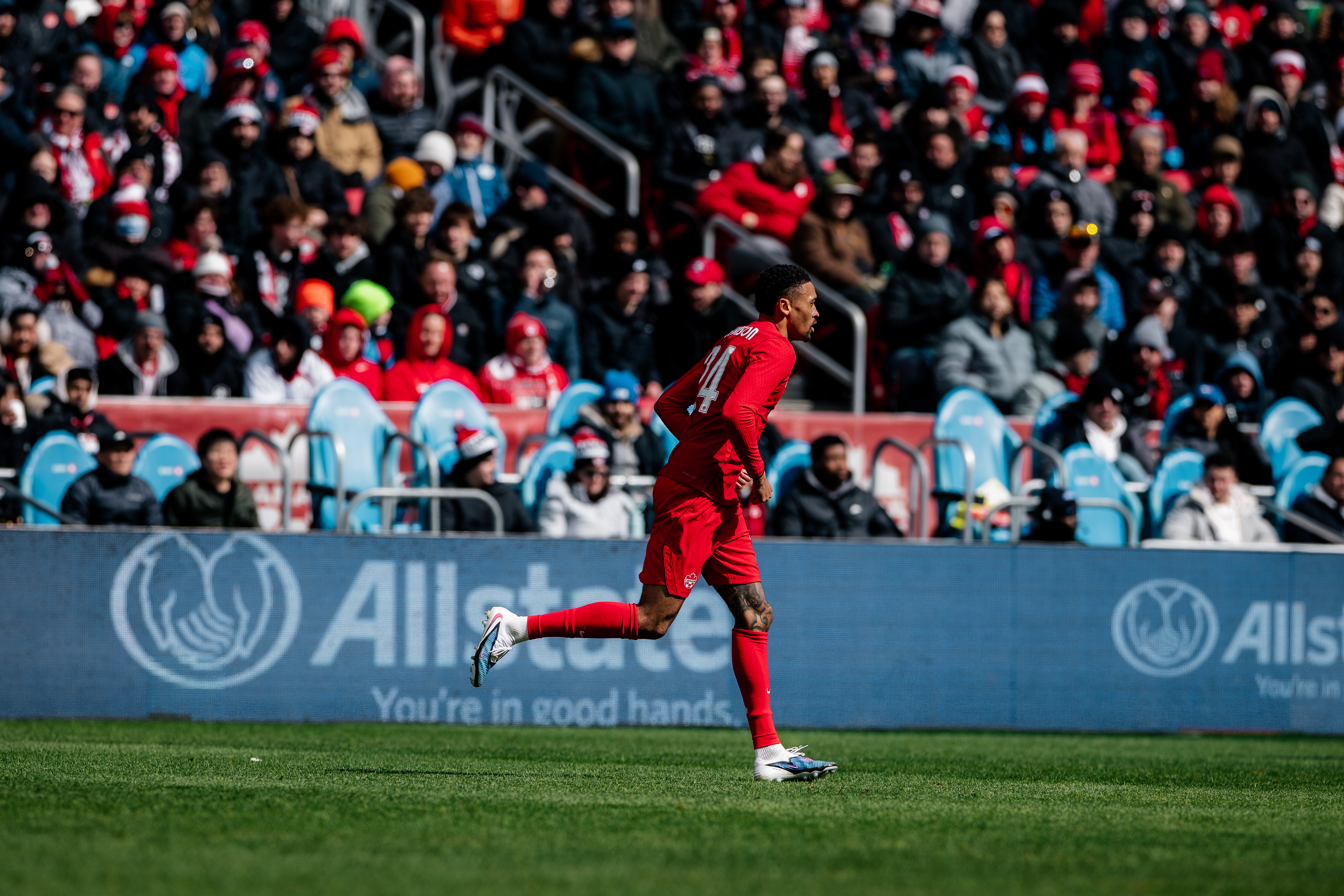
Alphonso Davies' watch begins:
While it would’ve been a massive shock to not see Alphonso Davies included in this squad, it’s still good to see him on this list as he continues to recover from a hamstring injury that has put him in a race against the clock to return for this World Cup.
Based on Marsch’s comments on Monday, Davies looks set to feature in this tournament if all goes well, although his participation in that June 12th opener looks extremely unlikely, but that’s with the presumption that his rehab all goes to plan.
Alphonso Davies won’t feature in the #CanMNT’s World Cup opener against Bosnia and Herzegovina on June 12, head coach Jesse Marsch believes 😕 pic.twitter.com/x6uSYcNVDQ
— OneSoccer (@onesoccer) May 25, 2026
Because of that, Davies will be put under a microscope once he joins up with the team on May 31st in Edmonton. If he’s able to participate in any of Canada’s other group stage games, which are against Qatar and Switzerland, that immediately boosts Canada’s odds of getting out of and perhaps even winning their group, but it’s also in Canada’s best interests to make sure that Davies is as healthy as possible for a potential knockout stage game, should they reach that far.
The good news is that while Davies is an extremely crucial player on this team, his absence won’t hurt their ability to pick up results in the group stage - his absence lowers Canada’s ceiling instead of their floor. Seeing how good he’s been for Bayern in the minutes he was able to play this year affirmed that, as well as how Canada has coped without him.
Thanks to that, it allows Canada to be patient with him - even if they’ll know that there will be a lot of questions about his status until he returns to full health (if he’s even able to do so) over the next few weeks.
The last thing Canada would want is for Davies to suffer yet another setback, having already had an injury-riddled season, ruining his chance to make an impact in a home World Cup.
The OS crew reacts to the news of Alphonso Davies' injury status 👀#CanMNT pic.twitter.com/DCjPmLYukc
— OneSoccer (@onesoccer) May 25, 2026
Marsch draws a line in the sand at the goalkeeper position:
 While Marsch has plenty to ponder as he looks to whittle his group of 32 players down to 26, there is one position where things are 100% settled - in goal. Barring an injury, Dayne St. Clair, Maxime Crépeau and Owen Goodman will be Canada’s three goalkeepers at the World Cup, with St. Clair and Crépeau set to battle for the #1 role.
Despite a late push from James Pantemis, who has been in excellent form for the Portland Timbers, Marsch has opted for familiarity in goal by drawing a clear line in the sand, only bringing three goalkeepers to this camp in St. Clair, Crépeau and Goodman.
Had Marsch invited Pantemis, that would’ve opened the door for questions about whether he could be deserving to start ahead of St. Clair and Crépeau, something that Marsch probably didn’t want to deal with at this venture - especially given the other headaches he’s already dealing with in his squad.
Is that the right decision? Only time will tell, as there will certainly be many who will be quick to point out Pantemis’s strong form if whoever is picked as Canada’s starter between St. Clair or Crépeau struggles at the World Cup, so Marsch will be pushing the pair to step up and reward the faith he’s placed in them.
While he didn’t make the 32-man preliminary roster, Jesse Marsch says James Pantemis needs to be ready in case of an injury on the goalkeeper front 👀
— OneSoccer (@onesoccer) May 25, 2026
“He’s the name that we would call immediately,” 🗣️#CanMNT pic.twitter.com/NP9e55cuHk
From there, Goodman will look to soak up as much of this opportunity as he can, given his status as a potential long-term starter for the future. He’s an extreme long shot to feature in games this summer, unless things go disastrously, but that Marsch was willing to bring him in ahead of Pantemis shows why he’s so highly regarded, and why it was seen as big news when Goodman committed to this program last fall after finally securing the paperwork he had long pushed to earn to make it happen. At the end of the day, his inclusion is more about the 2030 and 2034 World Cups than anything else.
For what it’s worth, while there’s a lot of focus on Canada’s goalkeeper situation, given Marsch’s reluctance to select a starter, it feels like this isn’t a position that will make or break their World Cup hopes - with how good this team has been defensively over the past year, and their issues up front, it feels like their ability to score goals will set the ceiling for this team, instead of the play of their goalkeepers. For all of the talk about the struggles with St. Clair and Crépeau for their club teams, they play in extremely permissive defensive environments in Inter Miami and Orlando City, respectively, whereas Canada has proven to be a lot more competent defensively, no matter who plays at the back or in net (as the last 12 months have shown with all of the injuries).
Because of that, the onus won’t be on the eventual starter to steal games, although it must be said, it sure wouldn’t hurt if whoever is picked steps up and puts in the sort of performances that can help a goalkeeper become a cult hero at a tournament like this - that could be the difference between a run to the Round of 32, and a surprise quarter-final appearance, for example.