KEY TAKEAWAYS: Jacob Shaffelburg finds scoring boots as CanMNT pick up 2-0 win vs. Peru


The CanMNT have made it two from two to kick off the September/October international window, as they defeated Peru 2-0 at Stade Saputo on Saturday.
After beating Chile 1-0 at BMO Field in Toronto last weekend, Canada delivered a solid building-block performance in Montréal, scoring two first-half goals before cruising to victory.
Considering that they were also able to further embed some new players into the fold, with Owen Goodman and Richard Chukwu starting for Canada for the first time, while Daniel Jebbison also earned a rare start up front, Canada will be pleased that they were able to pick up another positive result in the process.
Once again, they weren’t as dangerous as they should’ve been in front of goal, as they missed a few opportunities to further extend their lead in this game. Given the struggles they’ve had offensively over the last two years, it shows that they’re still not where they need to be on that side of their game, even if they did take a step forward this game after a quiet attacking performance against a shorthanded Chile side.
At the same time, they’ll know that their growth won’t always be linear, and that performances like this will be important for them, given what they were able to learn from it. With some big competitive matches on the horizon, these games are as much about sharpening their tools as they are about expanding the toolbelt for this Canadian side.
Given that Canada also made 11 changes to their lineup as the game went on, taking full advantage of the roster flexibility afforded to them with this being a friendly, that further shows why the game might not have been as smooth as they would’ve liked - that’s the trade-off they’ll get for wanting to get a wider look at their player pool and focusing on some long-term goals.
With that in mind, here are three KEY takeaways from this match.
Jacob Shaffelburg’s audition for a bigger role:
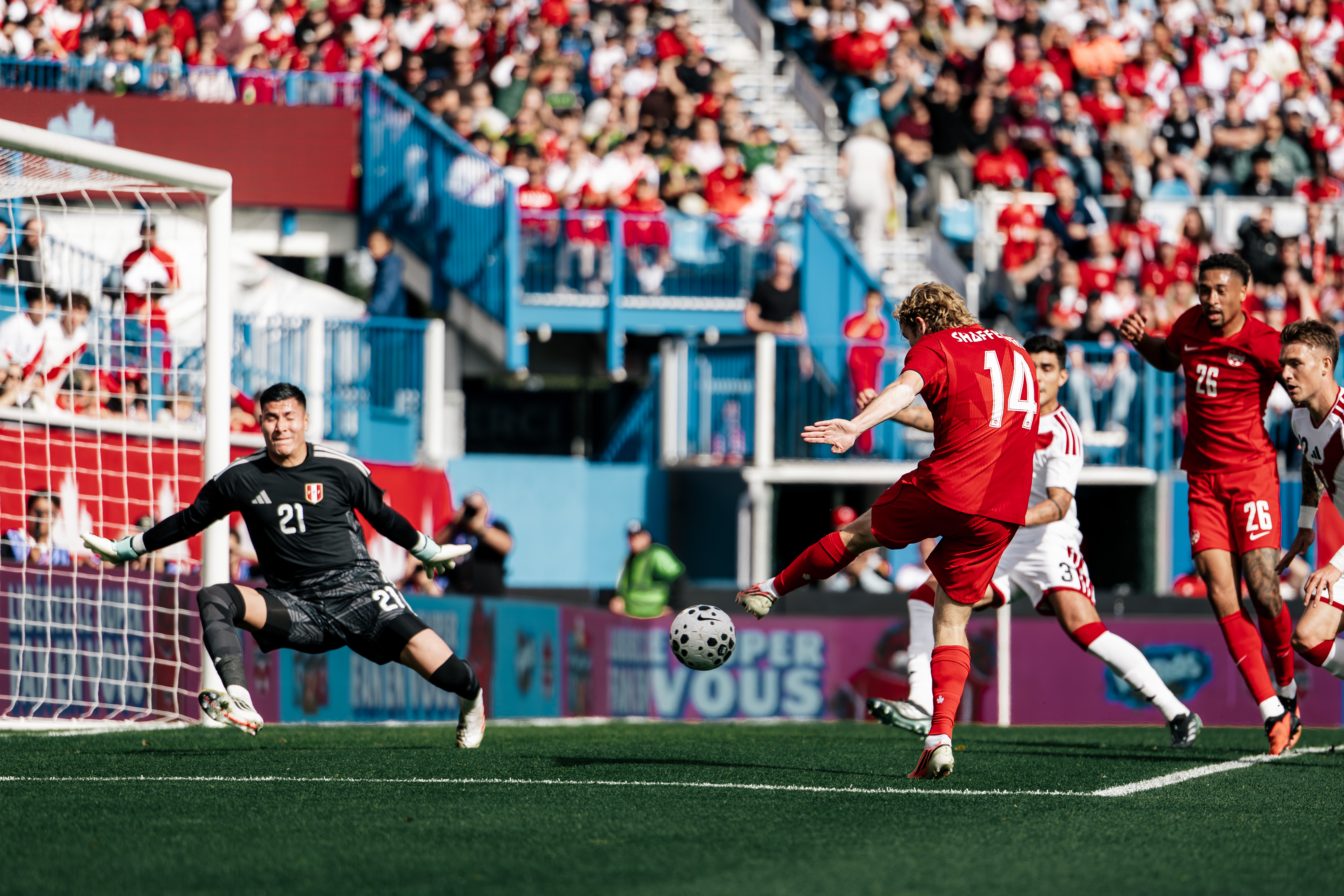 After a solid performance in a surprise start against Chile, Jacob Shaffelburg got another chance to start against Peru, in what was a huge opportunity for him to audition for a bigger role on this Canadian team after falling down the pecking order over the last 12 months.
For context, the last time he started back-to-back games for Canada? At the 2025 Gold Cup, which also happens to be the last time that he had started a game for Canada, period, before that Chile game, as he had dealt with a drop in form and some injuries.
Based on what he’s shown in these two starts, however, some more starts could be in his future, as he looks to have returned to the level that he was at in that stretch from the beginning of 2024 to the summer of 2025, which included his breakout 2024 Copa América performances, where he was almost undroppable for Canadian head coach Jesse Marsch.
Certainly, this Peru game was one of his best performances he’s had in a Canadian shirt, as he scored both of Canada’s goals, marking the first time in almost two years since he’d scored for his country.
GOAL 🇨🇦
— OneSoccer (@onesoccer) October 3, 2026
It's another hot start for the CanMNT, as Jacob Shaffelburg slots home after a nice Daniel Jebbison flick to make it 1-0
🔴Watch #CanMNT on OneSoccer pic.twitter.com/r5Lxmb9VKq
There wasn’t much to write home about on both of the goals, as they were simple finishes at the back post, but something can be said about the composure he showed with both of those attempts, something that a lot of other Canadian attackers have struggled with in recent games (including this one).
Plus, even beyond the goals, Shaffelburg’s overall play was worth noting, as he was lively down the left flank. On and off the ball, he was constantly moving, doing a good job of playing the sort of simple, north-south game that Marsch likes from his wingers.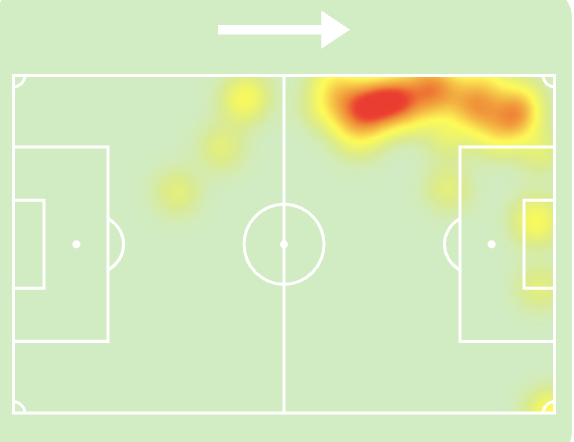
Here's Shaffelburg's heatmap from this game, showing that he occupied the areas Jesse Marsch will have wanted him to occupy (SofaScore)
Funnily enough, Shaffelburg’s stats don’t actually stand out that much beyond the goals - he completed none of the three dribbles he attempted, and failed to connect on any of the six crosses he whipped in. And he also won just one of the seven duels he got stuck into.
At the same time, his commitment to doing the little things asked of him saw him rewarded with the goals.
Of course, going forward, you would want Shaffelburg to be a bit more consistent in the final third, especially on the creative side of the game. If this Canadian team is to be more dangerous in the attack, they must create better service for their attackers.
Yet, with Shaffelburg’s ability to score goals, there won’t be as much pressure to be creative if he can continue to find a way to put the ball in the back of the net, given his teammates' struggles in that department.
GOAL 🇨🇦
— OneSoccer (@onesoccer) October 3, 2026
Make it 2 for Jacob Shaffelburg, who finishes home at the back post once again to put the CanMNT up 2-0 vs. Peru
🔴Watch #CanMNT on OneSoccer pic.twitter.com/JmysKYJ1OL
Certainly, it’s going to keep him in the discussion when it comes to starting games, and even if he struggles to maintain this level of form as Tajon Buchanan looks to re-find his form for Canada, Liam Millar continues to put in good performances (arguably standing out as the best attacker not named Shaffelburg in this game), and the duo of Ali Ahmed and Marcelo Flores look to return from injuries, Shaffelburg has shown in the past that he can be impactful as a substitute.
Because of that, don’t be surprised to see him feature prominently for Canada in the competitive games that await them over the next 12 months, whether that’s from the start of matches or off the bench. 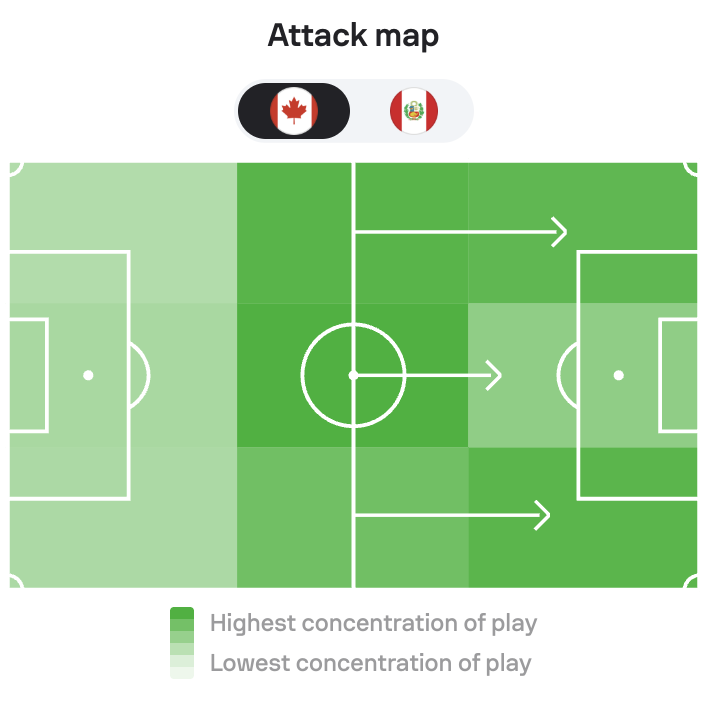
Here's Canada's attacking heatmap from this game, showing that wingers Jacob Shaffelburg and Liam Millar found good balance between one another on the flanks in this one (SofaScore)
How did Owen Goodman and the rest of the backline fare?
 Heading into this game, a big storyline was the news that Owen Goodman would be making his first start in the Canadian goal, as Jesse Marsch revealed in the lead-up to the game.
After committing to the program last fall, it was a well-deserved honour for Goodman, who was Canada’s third goalkeeper at this summer’s World Cup.
Seen as a goalkeeper for the future at just 22 years of age, it was a good chance for Marsch and his Canadian staff to see Goodman in the present and evaluate what he could potentially bring to this team going forward. Off to a good start to the season with Scottish Premiership side Dundee FC, who he joined on loan from Crystal Palace, it was also a good opportunity for Goodman to showcase himself, too.
While Canada finally had some clarity in goal at the World Cup, as Jesse Marsch ran with Maxime Crépeau after spending most of his tenure asking Crépeau and Dayne St. Clair to split time in goal, that hierarchy could easily change ahead of the 2030 World Cup.
One start. One clean sheet. ✅
— CANMNT (@CANMNT_Official) October 3, 2026
Owen Goodman starts his #CANMNT career off in style! pic.twitter.com/WlJrz6SmaQ
When asked about it this week, Marsch said that Crépeau, who missed this camp for personal reasons, was still his #1. So that debate won’t happen right away, of course.
At the same time, you can only wonder if Goodman could challenge that if he continues to take big strides forward at the club level and capitalizes on any opportunities that could be available for him with Canada, such as this one.
To return to that first opportunity, however, it’s worth noting that he mostly did what was asked of him in this game, keeping a debut clean sheet (although he didn’t have to face a single shot). There were a few crosses where he’ll look back on the film and evaluate how he could’ve done better with them, and his passing wasn’t the sharpest (he completed 10 out of 16 passes and just two of eight long balls), but he had three sweeper actions, two punches, four recoveries and three clearances. 
Here's Goodman's pass map from this game, showing that he struggled a bit with long balls (SofaScore)
All things considered, that’s not a bad showing, as you can only deal with what’s in front of you as a goalkeeper, so Goodman will be pleased that he did what was asked of him even if he didn’t face the stiffest of tests.
To that point, though, credit does have to be given to Canada’s backline, who put up a much cleaner performance against Peru than they did against Chile. They had one second-half breakdown where Peru should’ve scored if not for a bad shot attempt from Gianluca Lapadula, but other than that, they made sure Goodman’s life was quite easy.
In particular, the centre-back duo of Ralph Priso and Luc De Fougerolles had a good showing, while youngster Richard Chukwu didn’t look out of place in his first senior team start at left back, and Niko Sigur continued a run of solid performances at right back.
Given how young that backline is, and considering that they were playing in front of a young goalkeeper, that’s a credit to that group and the work they put in that they were able to pick up a comfortable clean sheet.
Yet, that’s a big theme from this window - Canada’s got some young players to watch at the back. Of course, everyone knew about De Fougerolles and Sigur after their standout performances over the last year (especially with De Fougerolles’s breakout showings at the World Cup), but between Priso, Jovan Ivanišević and Jamie Knight-Lebel, and Goodman in goal, some other names are rapidly emerging.
In particular, Ivanišević has turned a lot of heads this window, given that he was arguably the least known of all of these players heading into this camp, with all of the others having earned opportunities with this Canadian team before. Despite that, Ivanišević looks like he’s been part of the fold for a while, as he’s looked incredibly composed in both of his cameos, showing why he’s one to watch for the future.
So even beyond Goodman’s big debut, it’s safe to say that Marsch left with plenty to ponder when it comes to the performances some of these young defenders produced in both this game and in the window as a whole.
What did we learn from a rare formation switch?
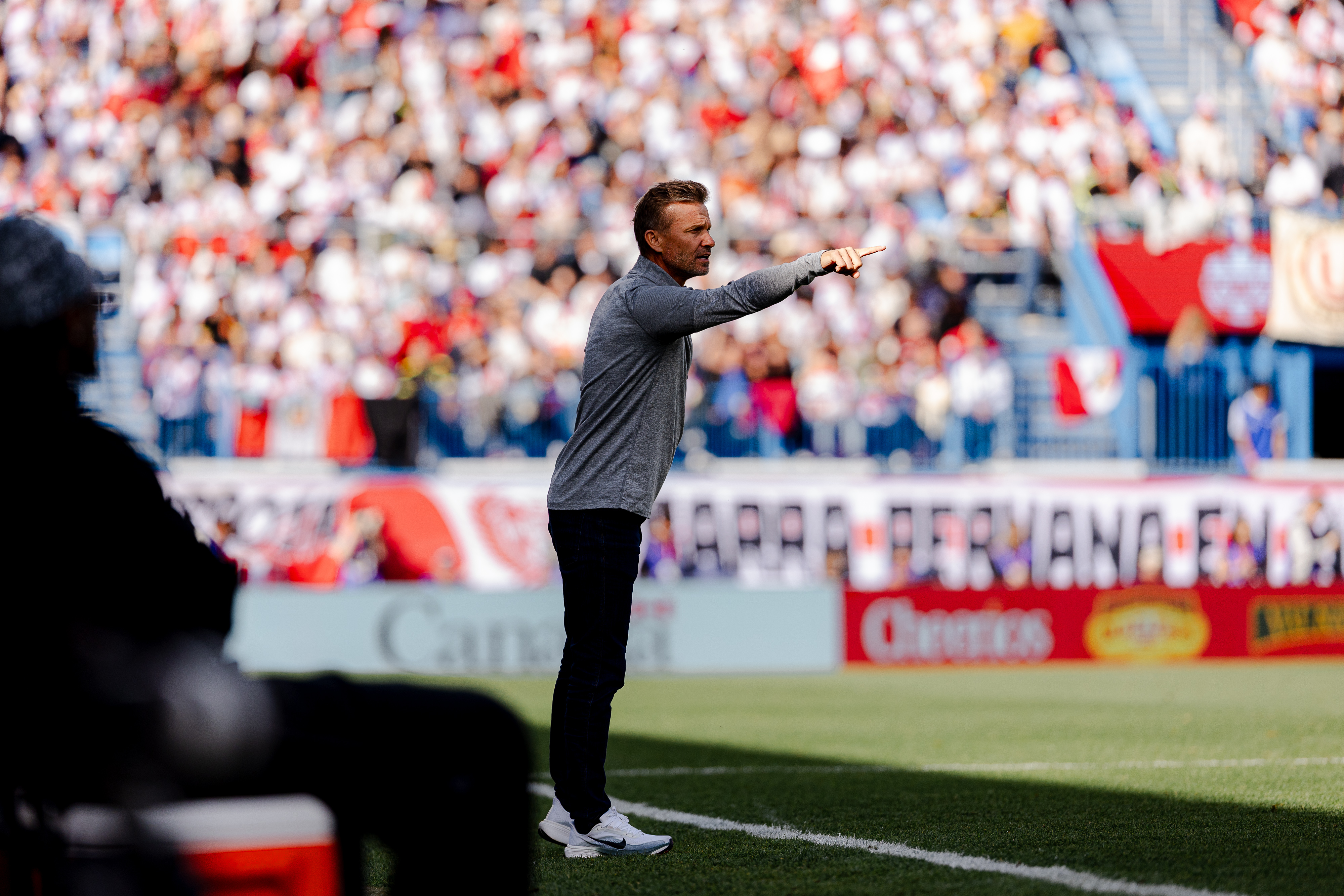 In a moment that brought some good comic relief, Jesse Marsch decided to shake up his team in the last 30 minutes of this game, as he made the rare ‘full line change’ substitution, making what was essentially a 10-player sub to shake up his team.
Safe to say that those pictures of 10 Canadian players being lined up across the sideline provided some good laughs, as it’s rare you see sights like that in a game like this (even if it was a friendly), with it being something straight out of a preseason game for a club team.
Line change!
— OneSoccer (@onesoccer) October 3, 2026
🔴Watch #CanMNT on OneSoccer pic.twitter.com/AjSDAeRZdy
On a more serious note, however, it’s worth noting that Marschh’s substitutions didn’t just end up being about putting some new faces onto the pitch (such as senior team debutant Justin Smith), or even about giving Samuel Piette a well-deserved celebration, but he experimented a bit with a new formation, too.
Instead of sticking with his usual 4-2-2-2, Marsh tweaked things by employing what ended up looking like a narrow 3-4-3, one with three strikers up front.
As usual, Canada continued to defend in their patented 4-2-2-2, so that didn’t change, but on the ball, they looked a lot different with this formation change, swaying from the 3-2-2-3 they usually like to use on the ball.
In particular, the movement of their strikers was quite fascinating, as the trio, which consisted of Tani Oluwaseyi, Jacen Russell-Rowe and Promise David, proved to be quite complementary to one another. With Oluwaseyi and Russell-Rowe playing off David, they were able to find some good pockets of space to play in, helping Canada create some dangerous chances.
Unfortunately, Canada were unable to convert on those opportunities, but it offered a new look for a Canadian team that hasn’t always made tweaks like this to their attacking set-up.
One can remember when they surprisingly employed a 3-5-2 for the second half of their pre-World Cup friendly against Uzbekistan (helping them pick up a 2-0 win), only for that formation never to reappear, so it’ll remain to be seen whether or not this 3-4-3 follows a similar journey, with Marsch only using it to get as many strikers as he can on the pitch (which is understandable given that he’s called in six of them to this window).
At the same time, for a Canadian team that has continued to run hot and cold in front of goal, one can wonder if more formation experiments like this are on the way, as they continue to find solutions to their goalscoring woes.
Every time they experiment with their formation like this, it offers new data points, and these 30 minutes in the 3-4-3 did offer some intriguing conclusions for Marsch to look at, one that could benefit from more time to further expand on.
Now, it remains to be seen if they’ll get that time, or if Marsch will stick with what’s been familiar for this team, especially from the start of the matches, with his tweaks usually only coming in the second half of games like this one.
Certainly, it’d be surprising to see him shake things up much ahead of Canada’s match against a US team brimming with confidence after a big win over rivals Mexico, given what this game will mean for Canada, but perhaps what he learned from this game could motivate him to catch that US team by surprise with a tweaked attacking group.